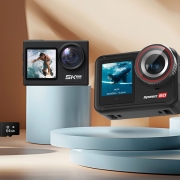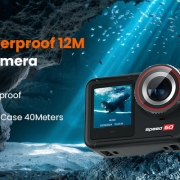
Speed20 Action Camera: Built for Real Motion🎥⚙️
Most action camera articles focus on specs — resolution, frame rate, waterproof depth.
But in real outdoor use, what truly defines a good action camera is how its system behaves under motion, vibration, and changing light.
Speed20 is designed around this principle. Instead of chasing numbers, it focuses on how footage feels when you watch it back.
1. Ultra-Wide Optics: Field of View vs. Visual Control 👀🌍
A wide field of view is essential for action cameras — but uncontrolled wide angles often lead to:
-
Edge distortion
-
Warped horizons
-
Unstable visual focus
Speed20’s ultra-wide lens is tuned for usable perspective, not just maximum coverage.
What this means in practice:
-
The main subject stays visually centered
-
Motion feels immersive, not dizzying
-
Horizon lines remain readable during movement
This balance is especially important for:
-
Cycling 🚴
-
Motor sports 🏍️
-
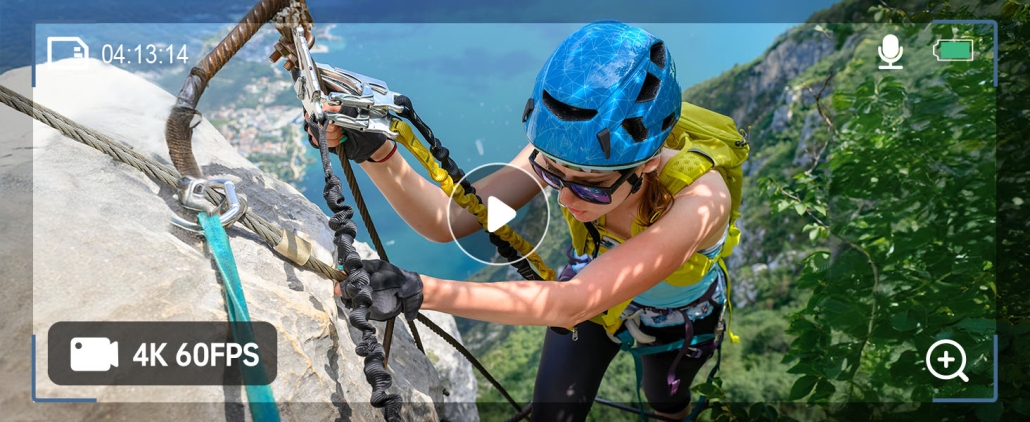
POV outdoor activities 🏔️
Wide, but not chaotic.
2. Electronic Image Stabilization: Designed for Motion, Not Marketing 🔄✨
Image stabilization is not about eliminating all movement — it’s about controlling motion in a natural way.
Speed20’s stabilization system focuses on:
-
Predicting movement direction
-
Smoothing micro-shakes
-
Preserving frame integrity
Instead of aggressive cropping, stabilization works progressively, which helps maintain:
-
Image clarity
-
Edge detail
-
Natural camera movement
🎯 Result: footage that looks watchable and realistic, even on rough terrain.
3. Dual-Screen Design: A Functional Workflow Advantage 📱🎯
Dual screens are often treated as a “feature,” but their real value is workflow efficiency.
Speed20’s front and rear screens help:
-
Reduce framing errors
-
Speed up setup time
-
Improve success rate for selfie and vlog shots
For creators, this means:
-
Fewer retakes
-
Less battery waste
-
Faster content production
In real use, this matters more than raw specs.
4. Video Encoding Philosophy: Stability Over Complexity 🎞️💻
Speed20 uses a widely supported video encoding format that prioritizes:
-
Editing compatibility
-
Smooth playback
-
Reliable file handling
This approach benefits users who:
-
Edit frequently
-
Upload to platforms like YouTube or social media
-
Work across multiple devices
Instead of chasing experimental formats, Speed20 focuses on consistency and efficiency — a practical decision for real creators.
5. Power Management in Dynamic Environments 🔋🌡️
Action cameras face unpredictable conditions:
-
Cold mornings ❄️
-
Hot summer rides ☀️
-
Long recording sessions ⏱️
Speed20’s system-level power optimization allows it to:
-
Maintain stable operation
-
Avoid sudden shutdowns
-
Deliver predictable runtime
This reliability is critical for outdoor users who cannot afford missed moments.
6. Structural Design for Outdoor Use 🛠️🌊
Beyond internal performance, Speed20 is designed as a physical tool, not just a gadget.
Key design priorities include:
-
Secure mounting stability
-
Waterproof protection with housing
-
Resistance to vibration and impact
Whether mounted on a helmet, bike, or handheld rig, the camera remains stable and responsive.
7. Who Is Speed20 Built For? 🎯
Speed20 is ideal for users who value:
-
Stable, natural-looking footage
-
Efficient shooting workflows
-
Reliable performance in motion
Perfect for:
-
Outdoor sports enthusiasts 🚴♂️
-
Travel and adventure vloggers 🌍
-
Action-focused content creators 🎥
It’s not about flashy numbers — it’s about usable results.
Final Thoughts: A System, Not Just a Camera 💡
Speed20 stands out by focusing on how all components work together, rather than spotlighting individual specs.
The result is an action camera that:
-
Feels predictable
-
Performs consistently
-
Produces footage people actually enjoy watching
In a market full of spec-driven noise, Speed20 takes a system-first approach — and that’s exactly why it works.